Specify both materials
Identify the substrate and overmold grades, supplier availability and the intended use of the finished part.

Overmolding can combine a substrate with a second molded material for grip, protection or an interface feature. For electronic components, instruments and industrial equipment, the useful question is how that interface will perform in the intended assembly and environment.
Overmolding can combine different materials in a component. The exact resin grades, interface design and required performance should be reviewed together before selecting the tooling process.
Identify the substrate and overmold grades, supplier availability and the intended use of the finished part.
Consider material compatibility, geometry and mechanical retention. Confirm adhesion or sealing requirements through an agreed test plan.
Discuss transfer overmolding or two-shot molding as appropriate to the part, equipment and quantity. Handling between operations can affect labor, schedule and cost; confirm the approach in the quotation.
Overmolding is an injection molding process where an elastomeric resin (such as TPE, TPU, or silicone) is molded over a pre-formed rigid plastic substrate. High-integrity bonding relies on thermal fusion where the melt temperature of the overmold slightly softens the substrate interface, achieving peel strength exceeding 35 N/cm without secondary adhesives.
Evaluate Hansen solubility parameters and melt temperatures between substrate and overmold. Compatible polymer pairs melt-fuse at the boundary layer, forming a molecular weld that resists peeling and fluid ingression.
Design through-holes, dove-tail grooves, and peripheral anchor channels. Mechanical interlocking ensures permanent retention even when chemical adhesion is degraded by harsh solvents or environmental weathering.
Precision CNC machining of core shut-offs prevents low-viscosity elastomer leakage. Spring-loaded or hydraulic shut-off lands guarantee crisp, flash-free transition lines between soft grip and rigid substrate.
Chemical compatibility between the rigid substrate and the soft overmold determines joint longevity under thermal cycling and mechanical stress. Polar resins such as ABS and PC achieve spontaneous chemical fusion with TPU, while non-polar polypropylene requires polyolefin-based TPE or mechanical undercut interlocks.
The matrix below illustrates proven material pairings, bond types, and bond strength ratings based on standard ASTM D903 90-degree peel testing. For high-reliability electronic and instrument overmolding, we validate substrate preheat conditions and tool temperatures during 24-hour DFM engineering review to optimize molecular interdiffusion.
| Rigid Substrate | Compatible Overmold | Bonding Mechanism | Peel Strength | Recommended Molding Process | Typical Applications |
|---|---|---|---|---|---|
| ABS (Acrylonitrile Butadiene) | TPE (Styrenic TPS), TPU (Polyurethane) | Chemical melt fusion | High (> 35 N/cm) | Two-shot (2K) rotary or insert transfer overmolding | Handheld tool grips, medical device handles, electronic remote casings |
| PC (Polycarbonate) | TPU, TPE (specialized grades) | Chemical melt fusion | High (> 40 N/cm) | Two-shot (2K) or robotic transfer overmolding | Rugged instrument frames, shock-absorbing protective cases, wearable bezels |
| PA66 (Nylon 6/6) | Specialty modified TPE (amine-functionalized) | Chemical fusion + Mechanical interlocks | Moderate to High (> 25 N/cm with mechanical undercut) | Insert transfer overmolding with pre-heated nylon substrate | Power tool structural handles, automotive under-hood connector seals |
| PBT (Polybutylene Terephthalate) | Specialized modified TPV / TPE grades | Chemical fusion + Mechanical groove | Moderate (20 to 30 N/cm) | Two-shot or transfer molding | Automotive sensor waterproof seals, electrical switch housings |
| PP (Polypropylene) | Polyolefin-based TPE / TPV (Santoprene) | Direct chemical bond | Very high (> 45 N/cm, substrate failure) | Rotary two-shot or core-back injection molding | Fluid cap gaskets, toothbrush ergonomics, automotive interior bezels |
Two-shot (2K) injection molding utilizes rotary platen presses to mold substrate and overmold sequentially in one cycle, optimal for production volumes exceeding 50,000 units. Transfer overmolding uses separate single-cavity presses with manual or robotic substrate loading, offering lower initial tooling expenditure for bridge runs and complex multi-insert assemblies.
In two-shot molding, automated indexing eliminates operator handling and minimizes contamination, ensuring cycle times of 25 to 45 seconds. For lower volume or high-mix assemblies, transfer overmolding allows pre-molded substrates to stabilize dimensionally and receive electrical or threaded inserts before the elastomer skin is applied.
When overmolding delicate internal electronic subassemblies, sensors, or PCBAs, injection pressure and melt temperature must remain strictly within safe component limits. We review protective wall thicknesses and gating locations during 24-hour DFM to eliminate thermal degradation.
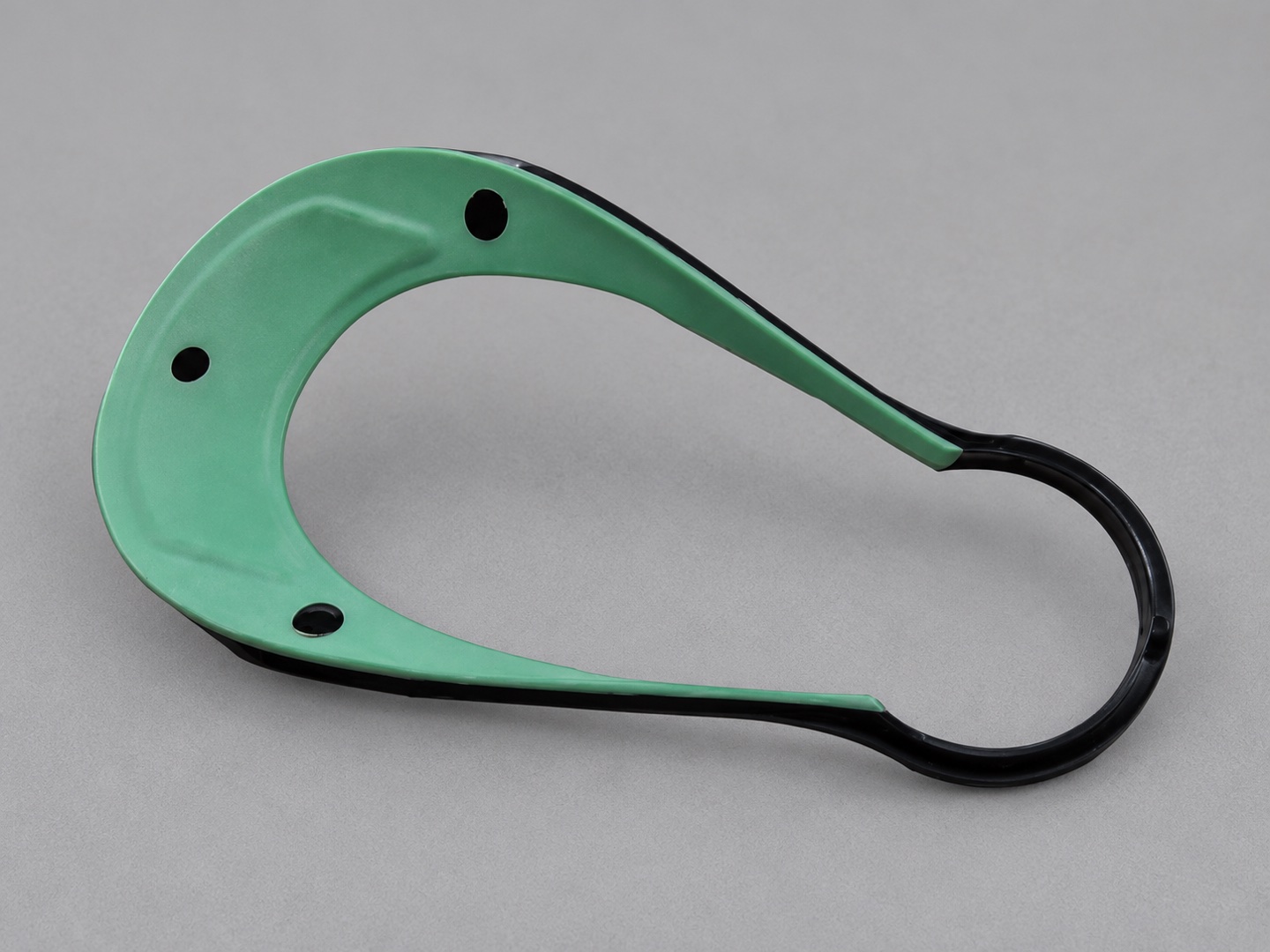
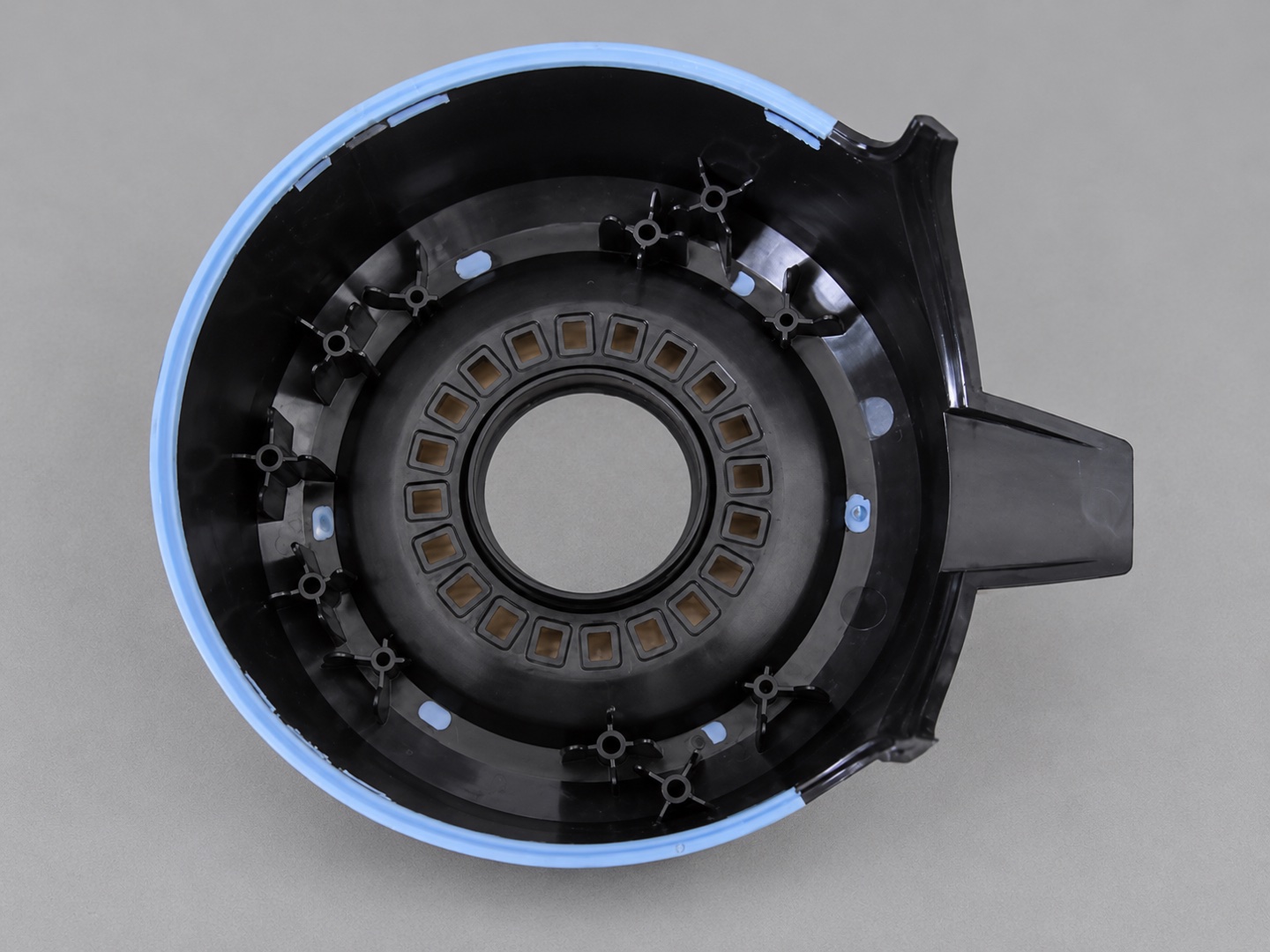
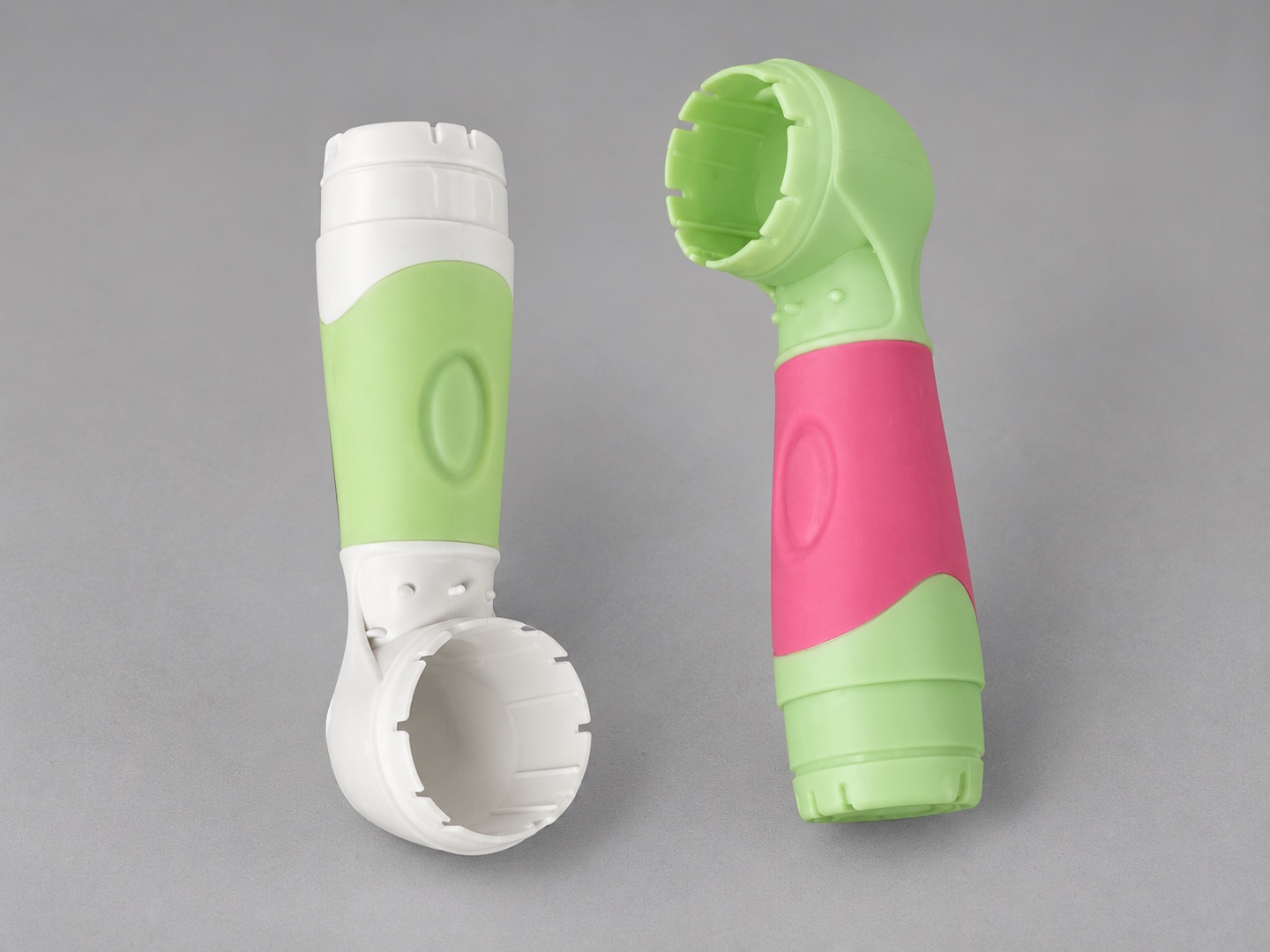
Explore related catalog parts. Images illustrate part types; confirm materials, dimensions and acceptance requirements for your project.
No. Transfer overmolding and two-shot molding are different approaches. The suitable method depends on the material pairing, part design, handling, available equipment and production quantity.
Adhesion depends on the exact material grades, surface and process conditions. Review compatibility and, when needed, mechanical retention and an agreed validation test.
Please supply 3D CAD models of both the rigid substrate and finished overmolded part, exact resin grades (or functional requirements like Shore A hardness), estimated annual quantity, and cosmetic texture specifications.
Agree the required adhesion or retention test, sample condition and acceptance criteria for the application. Test availability and reporting are confirmed for the project.
Share the application, drawing revision, material requirements, expected quantity and acceptance needs. Sensitive files can be exchanged after an NDA through a channel we agree together.
Request a Quote