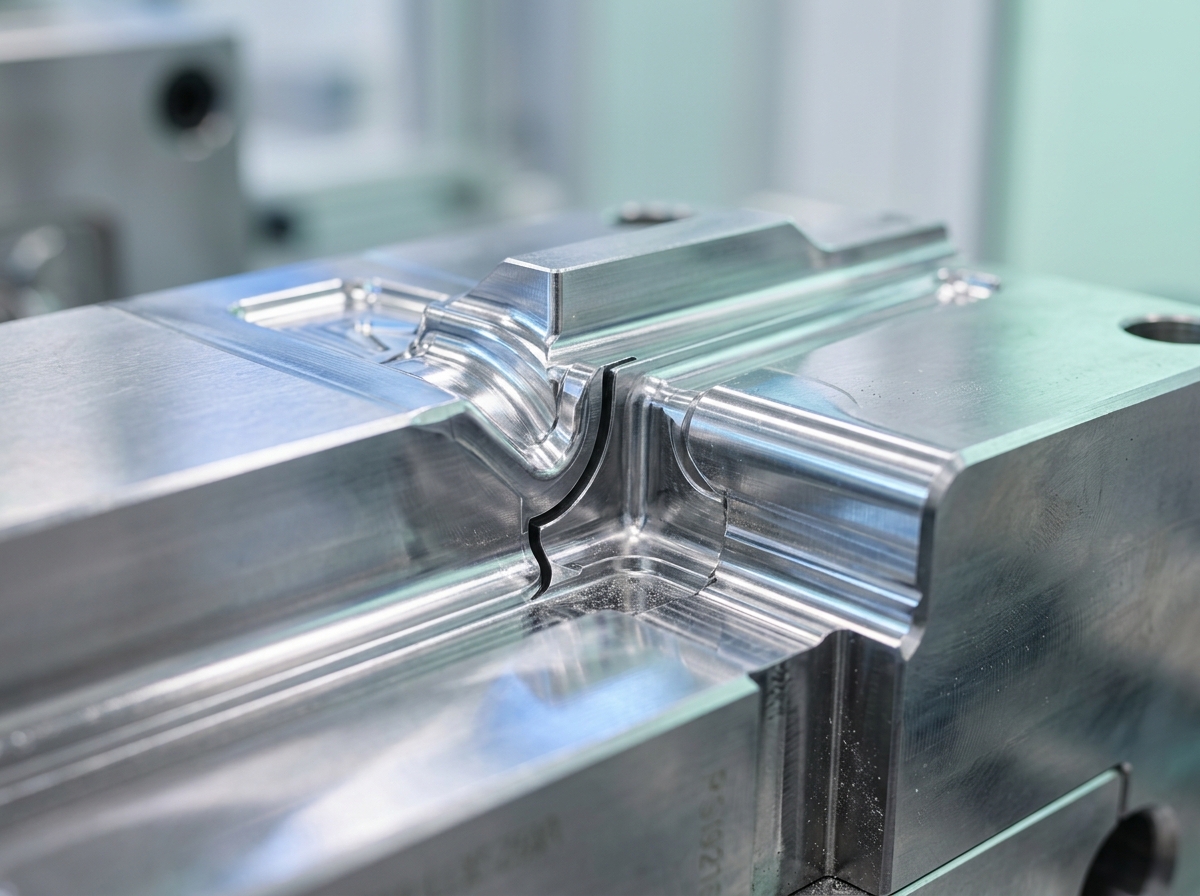
Tooling Metallurgy10 min read
Injection Mold Steel Selection: P20, 718H, S136, NAK80 & 1.2343 ESR
A rigorous metallurgical comparison of pre-hardened vs. through-hardened mold steels: Rockwell hardness (HRC), SPI polishability, corrosion resistance against flame retardants, and SPI Class 101 to 105 tooling lifespan.
Key rule: Select S136/1.2083 for optical polish & corrosive resins; 718H for large core/cavity blocks; NAK80 for zero-stress EDM texturing.
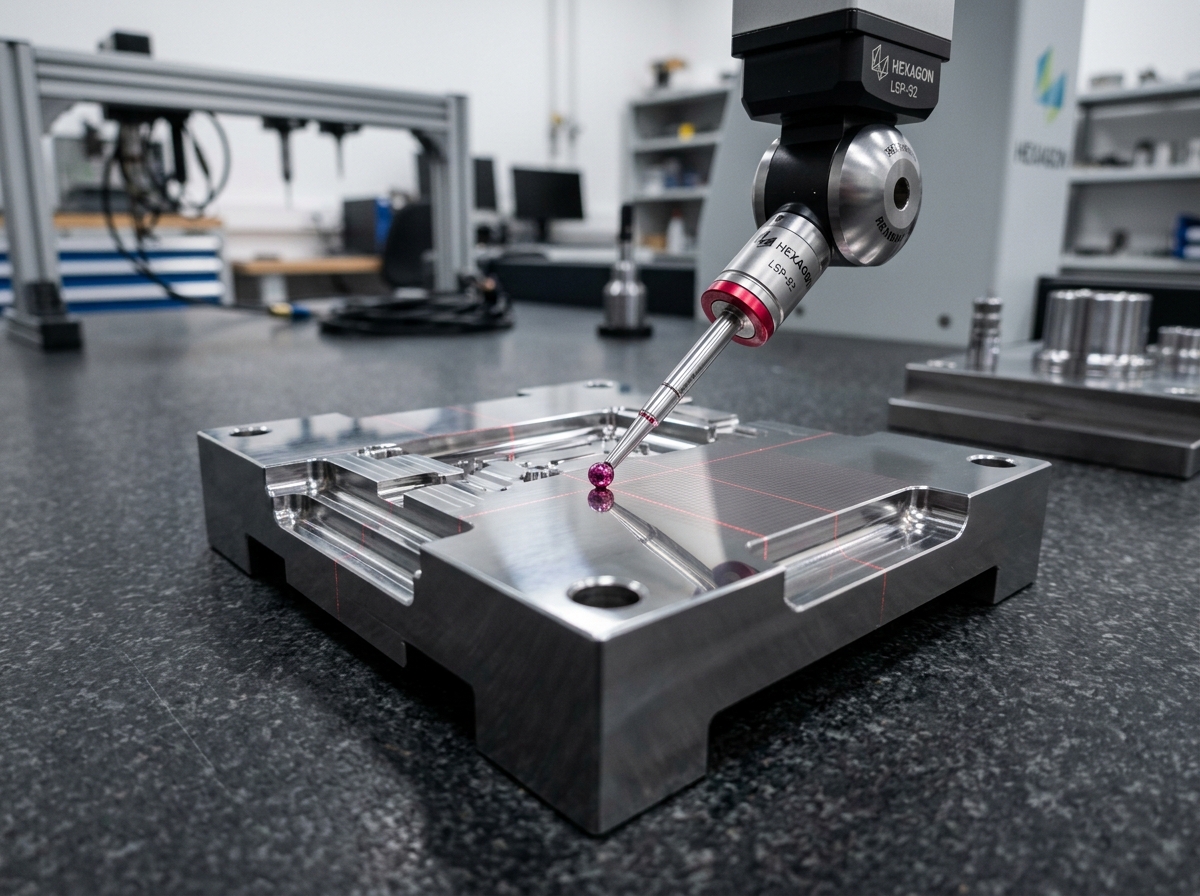
Tolerances & Metrology12 min read
Plastic Injection Molding Tolerances: DIN 16742 & ISO 20457 Engineering Guide
Practical engineering tolerances for injection molded plastic parts: Tolerance Groups TG1 to TG9, mold-bound vs. non-mold-bound dimensions, anisotropic shrinkage compensation, and steel-safe tooling adjustments.
Key rule: Mold-bound features reliably achieve TG3 to TG4 (±0.05 to 0.10 mm); parting line and slider crossings require TG5 to TG6 (±0.12 to 0.20 mm).
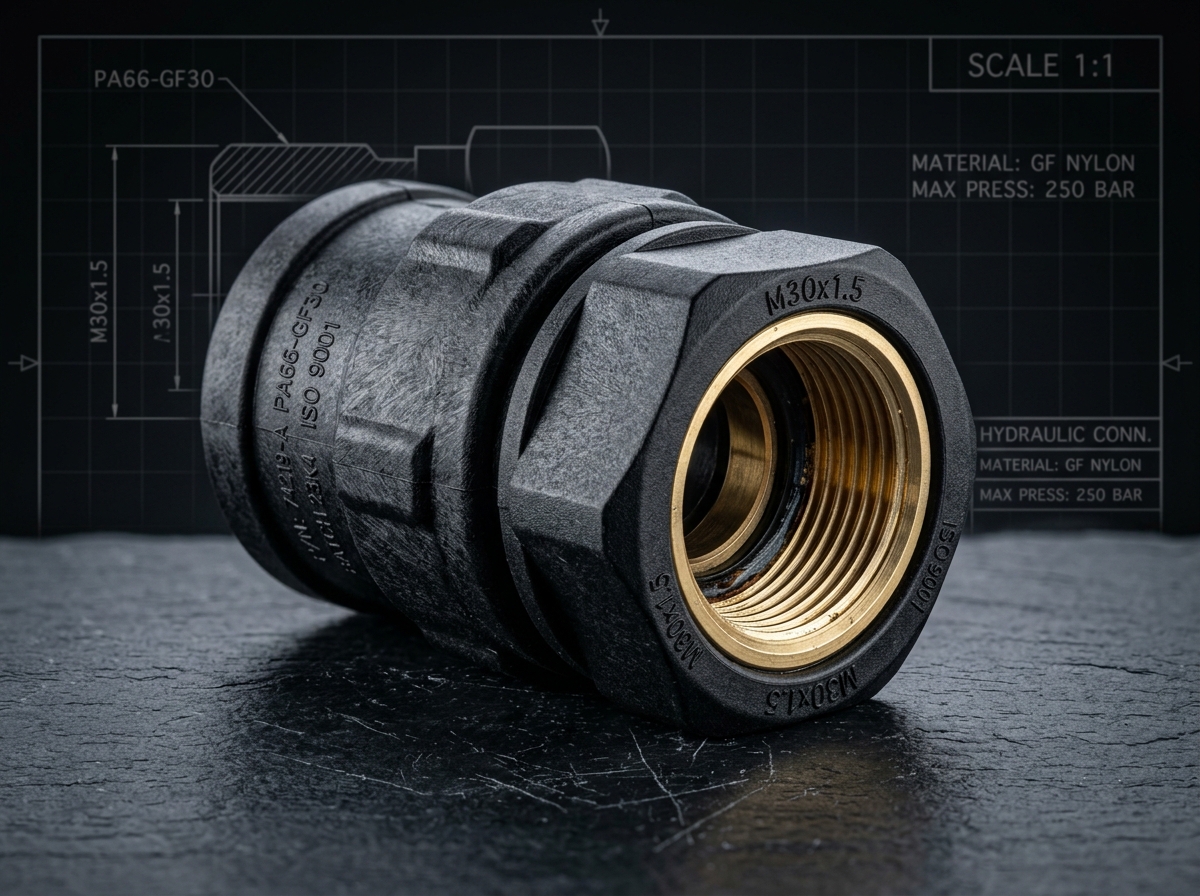
Thermal Dynamics9 min read
Mold Cooling Thermodynamics: Heat Flux & 3D Conformal Waterline Optimization
Thermal calculations for injection molds: heat extraction formulas, Reynolds number (Re ≥ 4000) for turbulent coolant flow, cycle time reduction equations, and DMLS 3D printed conformal cooling economics.
Key rule: Cooling time scales with the square of wall thickness; turbulent flow increases heat transfer by 300%; core/cavity ΔT ≤ 2°C eliminates warpage.
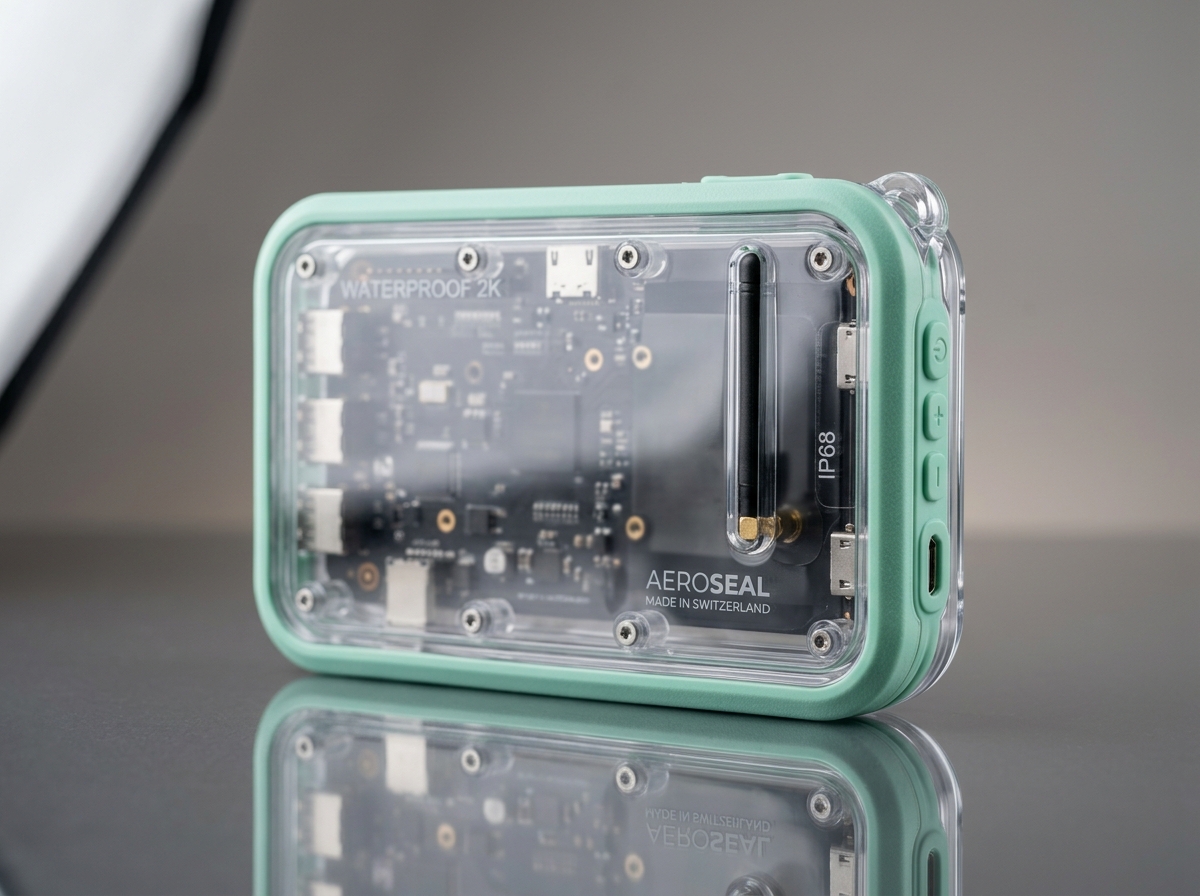
Multi-Material & Insert DFM11 min read
Overmolding & Insert Molding Design Guide: Substrate Adhesion, Mechanical Interlocks & Metal Insert Retention
Interface engineering for TPE/TPU overmolding and metal insert encapsulation: ASTM D903 chemical peel adhesion matrix, 0.03 to 0.05 mm shut-off interference lands, Lame boss hoop stress equations, and 2K rotary vs. transfer molding.
Key rule: Polar PC/ABS + TPU achieves >38 N/cm peel strength; size plastic boss OD ≥ 2.0–2.5× insert OD and pre-heat brass inserts to 100°C to prevent hoop stress cracking.
Part DFM & Undercuts11 min read
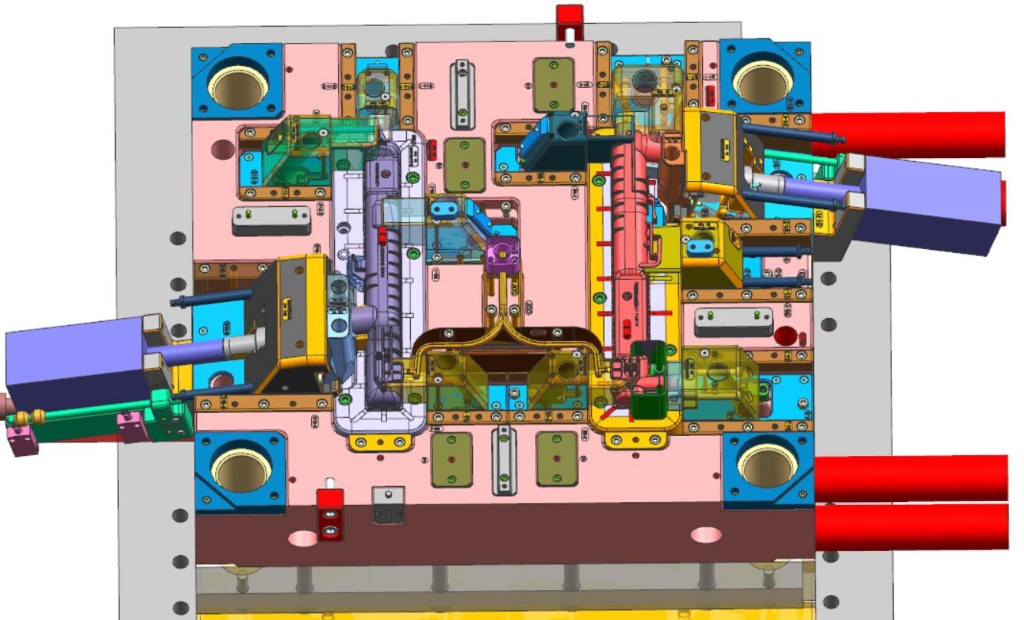
Plastic Injection Molding DFM Guide: Wall Thickness, Draft Angles, Rib-to-Wall Ratios & Undercut Lifters
Quantitative CAD geometry rules for injection molded parts: nominal wall thickness limits by resin, 50%–60% rib-to-wall ratios against A-surface sink marks, VDI texture draft formulas, coring out screw bosses, and cam slider vs. angled lifter kinematics.
Key rule: Keep rib base thickness ≤ 0.5–0.6× nominal wall for glossy plastics; add +1.0° draft per 0.025 mm texture depth; use pass-through shut-offs (≥ 3°–5°) to eliminate side-action mechanisms.
Rheology & Gating10 min read
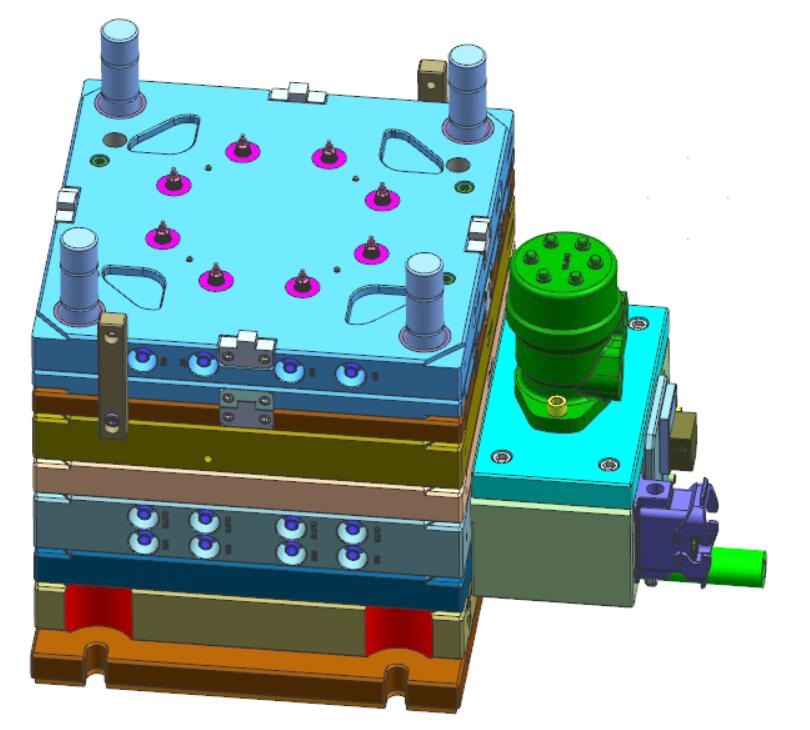
Injection Mold Gate & Runner System Engineering: Shear Rate Limits, Submarine vs. Valve Gates & Hot Runner ROI
Polymer melt delivery engineering: apparent shear rate calculations (γ̇ = 32Q / πd³), resin shear limits, submarine vs. banana vs. fan vs. valve gate sizing rules, H-pattern vs. radial runner balance, and hot runner ROI break-even math.
Key rule: Size gates so shear rate stays below resin degradation limits (40,000 s⁻¹ for PC/ABS) and keep gate land length strictly between 0.5 and 0.8 mm for clean pack pressure transmission.

Surface Metrology10 min read
SPI Surface Finish Standards vs. VDI 3400 Mold Texture Chart: Ra Roughness, Optical Polishing & Draft Rules
Complete cross-reference between North American SPI finish standards (A-1 to D-3) and European VDI 3400 EDM textures (VDI 12 to VDI 45): Ra roughness in µm and µin, ESR steel requirements against orange peel, and draft angle increments.
Key rule: SPI A-1/A-2 optical diamond finishes require ESR stainless steel (S136 at 50–52 HRC); VDI 24–27 (#0.5–0.63 µm Ra) is the optimal satin matte finish for electronic enclosures.
Scientific Molding & QC12 min read
Injection Molding Defects & Scientific Molding Guide: Root-Cause Matrix for Sink Marks, Warpage, Weld Lines & Flash
Diagnostic root-cause matrix separating polymer rheology, mold steel tooling (venting, gate seal, cooling ΔT), and decoupled V/P processing for 8 major injection molding defects—plus in-mold viscosity and gate freeze-off studies.
Key rule: Machining 0.015–0.030 mm parting-line and ejector-pin vents eliminates diesel burn marks; decoupled 95%–98% V/P transfer and gate freeze studies stabilize part weight within < 1.5%.